Working from home has changed the way many people think about residential interior design.
A home office is no longer simply a desk placed in the corner of a bedroom. For professionals, business owners, entrepreneurs and remote workers in Dubai, it can be one of the most frequently used spaces in the home.
A properly designed home office should help you focus, stay organised, feel comfortable and work efficiently, while still fitting naturally into the overall interior of your property.
Whether you have an entire room available or need to create a compact workstation inside an apartment, thoughtful interior planning can make a significant difference.
Here are the most important elements to consider when designing a home office in Dubai.
1. Start With the Right Location
Before choosing furniture, decide where your workspace should be located.
If you have a spare bedroom or dedicated study, creating a separate office may be straightforward.
In smaller homes, however, the workspace may need to be incorporated into the:
- Bedroom
- Living room
- Hallway
- Guest room
- Dining area
- Landing
- Built-in joinery
Wherever possible, choose an area that gives you some separation from the busiest parts of the home.
A beautiful workstation positioned beside constant household activity may still be difficult to use.
The ideal location should balance privacy, natural light, accessibility and available space.
2. Position Your Desk Carefully
Desk placement has a major effect on the way an office feels.
If possible, avoid sitting directly with your back toward the entrance.
Many people feel more comfortable when they can naturally see the room while working.
A desk positioned near a window can provide natural light and an attractive view, but placing your computer directly opposite strong sunlight may create glare.
A side-facing position can often provide a good balance.
In Dubai apartments with large windows, natural light can be a major advantage when controlled correctly.
3. Choose the Right Desk Size
Bigger is not always better.
The desk should match both your available space and the type of work you perform.
Ask yourself:
Do you work mainly from a laptop?
Do you use multiple monitors?
Do you regularly review documents?
Do you need space for meetings?
Do you require equipment such as a printer?
Someone working from a laptop may need a relatively compact desk, while a professional using several screens may require considerably more surface area.
The important thing is maintaining enough workspace without making the room feel overcrowded.
4. Invest in a Comfortable Office ChairThe office chair is one area where appearance should not come before comfort.
If you spend several hours every day working, proper seating matters.
Consider:
- Back support
- Adjustable height
- Armrests
- Seat comfort
- Desk height
- Overall posture
Fortunately, ergonomic furniture does not need to look overly corporate.
Modern office chairs are available in elegant materials and neutral colours that can blend beautifully with luxury residential interiors.
5. Make Lighting a Priority
Poor lighting can make even an attractive office uncomfortable.
A good home office should use several lighting sources.
Natural Light
Use available daylight whenever possible.
General Lighting
Ceiling lighting provides overall illumination.
Task Lighting
A desk lamp can provide focused light for working, writing or reading.
Decorative Lighting
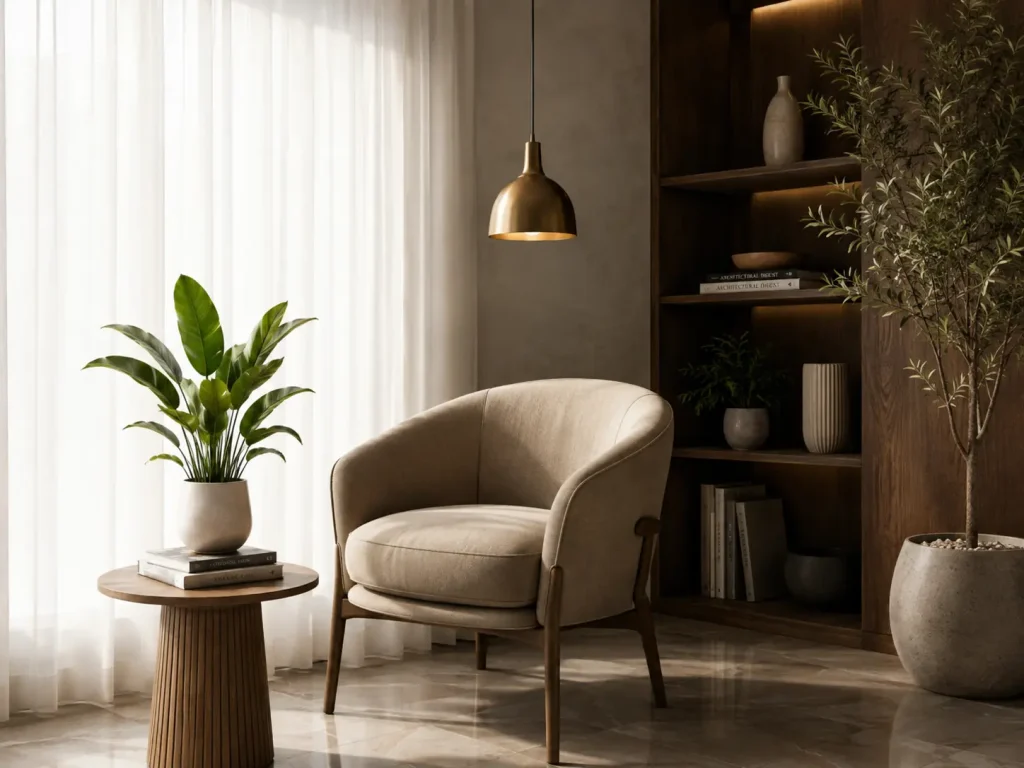
Pendant lights, wall lights or integrated shelving lights can give the office a more refined appearance.
For video meetings, consider how light reaches your face.
Strong lighting directly behind you can make you appear dark on camera.
A well-positioned light source in front or slightly to the side can usually create a better result.
6. Create an Attractive Video-Call Background
Video meetings have made the wall behind your desk an important part of office design.
Instead of leaving it completely empty—or filling it with random objects—create a simple, professional background.
Ideas include:
- Custom shelving
- Artwork
- Decorative wall panels
- Books
- Plants
- Minimal accessories
- Subtle lighting
The background should communicate personality without becoming distracting.
For business owners and professionals who frequently attend online meetings, it can also help create a more polished impression.
7. Build Storage Into the Design
Paper, chargers, equipment, notebooks and accessories can quickly create clutter.
Proper storage makes the office easier to use and visually calmer.
Consider:
- Built-in cabinets
- Floating shelves
- Drawers
- Filing storage
- Concealed printer cabinets
- Cable compartments
Where space allows, floor-to-ceiling cabinetry can provide substantial storage while giving the room a more architectural appearance.
In smaller apartments, combining the desk and storage into one custom wall unit can be particularly effective.
8. Hide Cables and Technology
Nothing disrupts a clean office design faster than visible cables running across the desk and floor.
Plan electrical requirements early.
Consider where you need:
- Power sockets
- USB charging
- Computer connections
- Internet equipment
- Printers
- Monitors
- Lighting
Cable management can be incorporated into custom desks and joinery.
When planned correctly, technology becomes almost invisible.
9. Choose Colours That Help You FocusColour influences the atmosphere of a workspace.
For a calm and professional home office, consider colours such as:
- Warm white
- Beige
- Greige
- Taupe
- Light wood
- Navy
- Olive
- Muted brown
Neutral colours can create a timeless foundation.
You can then introduce stronger colour through artwork, chairs or accessories.
Avoid combining too many strong colours if the objective is to create a calm environment for concentration.
10. Bring Natural Elements Into the Office
Plants and natural materials can help soften a workspace.
Consider incorporating:
- Indoor plants
- Natural wood
- Stone
- Linen
- Textured fabrics
- Natural decorative accessories
Even one well-positioned plant can make an office feel less formal and more comfortable.
Natural elements also work particularly well with contemporary, minimalist and warm-luxury interiors.
11. Think About Acoustics
Noise can be one of the biggest challenges when working from home.
Hard floors, glass, stone and large open spaces can sometimes increase sound reflection.
Soft furnishings can help.
Consider:
- Curtains
- Rugs
- Upholstered chairs
- Acoustic wall panels
- Fabric finishes
For people who spend much of the day on calls or virtual meetings, acoustic comfort deserves as much attention as visual design.
12. Design for Focus and Organisation
Your desk should contain only the things you use regularly.
Too many accessories can become visual distractions.
A practical office might keep everyday items accessible while storing everything else inside cabinets and drawers.
Create designated locations for:
- Documents
- Chargers
- Stationery
- Business cards
- Devices
- Personal items
An organised environment can make it easier to start and finish the working day.
13. Separate Work From Home Life
One challenge of working remotely is feeling like work never ends.
Interior design can help create psychological separation.
If you have a dedicated office, closing the door at the end of the day creates a clear boundary.
For an office integrated into another room, consider:
- Concealable desks
- Sliding panels
- Cabinet doors
- Screens
- Zoned lighting
Being able to visually “close” your workspace can help the rest of the home feel like a home again.
14. Create a Luxury Executive Home Office
For villas or larger apartments, the home office can become a statement room.
A premium executive office might include:
- Custom desk
- Feature wall
- Full-height joinery
- Comfortable visitor chairs
- Decorative lighting
- Art
- Integrated technology
- Private reading area
Rather than filling the space with traditional dark furniture, consider combining natural wood, stone, warm neutral tones and contemporary lighting.
The result can feel sophisticated without appearing overly corporate.
15. Small Home Office Ideas for Dubai Apartments
You do not need a separate room to create a useful office.
A compact workstation can be integrated into:
A Bedroom
Use custom joinery to combine a desk with wardrobes.
A Living Room
Create a small workstation that matches the surrounding furniture.
A Hallway
A wide hallway or unused niche can sometimes accommodate a slim desk.
A Guest Room
Use multifunctional furniture so the room can serve both purposes.
Inside Cabinetry
A desk can even be concealed behind full-height doors when not in use.
For small spaces, custom design can often make better use of every centimetre than standard furniture.
16. Should Your Home Office Match the Rest of Your Home?
Generally, yes.
A home office can have its own personality, but it should still feel connected to the overall property.
You can achieve this by repeating certain elements such as:
- Wood finishes
- Metal details
- Flooring
- Wall colours
- Furniture shapes
- Lighting finishes
This creates continuity.
Your office then feels like a carefully designed part of the home rather than a separate commercial workspace placed inside it.
17. Common Home Office Design Mistakes
Try to avoid:
- Choosing style over comfort
- Using an unsuitable chair
- Poor desk positioning
- Insufficient lighting
- Visible cable clutter
- No storage
- Distracting video-call backgrounds
- Ignoring acoustics
- Overcrowding a small space
- Buying furniture before measuring
- Using excessive decoration
A successful home office should feel simple and easy to use.
What Makes a Home Office Feel Luxurious?
Luxury does not necessarily mean filling the room with expensive furniture.
A premium home office usually comes from:
Good proportions
Everything fits naturally within the room.
Quality materials
Finishes feel refined and durable.
Custom storage
Everything has a designated place.
Thoughtful lighting
The office works comfortably throughout the day.
Integrated technology
Cables and equipment remain discreet.
Personalisation
The space reflects the person using it.
When these elements work together, even a relatively compact home office can feel sophisticated.
Your Workspace Should Work for You
A home office should support the way you think, communicate and work.
There is no single perfect design.
A business owner holding frequent video meetings may need an executive background and visitor seating.
A creative professional may need larger work surfaces.
A remote employee may prioritise ergonomics and technology.
Someone occasionally working from home may only require a compact, beautifully integrated workstation.
The best design begins with understanding how you actually use the space.
Create a Home Office Designed Around Your Lifestyle
At AAA Business Consultancy L.L.C. – Interior Design Services, we believe good interior design should combine beauty with functionality.
Whether you are designing a dedicated executive office, creating a study room or incorporating a compact workspace into your apartment, thoughtful space planning can help create a more comfortable and productive environment.
Beautiful Spaces. Better Living.
📧 Email: id@aaabusinessconsultancy.com
📞 Phone / WhatsApp: +971 52 436 0123
🌐 Website: interior.aaabusinessconsultancy.com
📍 Office: Business Village, Block B, Floor 4, Office F-09, Port Saeed, Deira, Dubai, UAE
Advise • Assist • Achieve